
Stairs Sanding in Dorset
Get in TouchAt Wooden Floor Specialist, we offer professional stairs sanding to transform the wooden stairs in your home or business. Our service involves carefully sanding down the surface of wooden stairs to remove old finishes and imperfections.
This not only enhances their appearance but also prolongs their life. We use advanced sanding equipment and techniques to ensure a smooth, even finish on a range of wood types, including oak and pine.
Contact us today to restore the beauty of your stairs in Dorset and the surrounding DT11 7 area.
What Is Stairs Sanding?
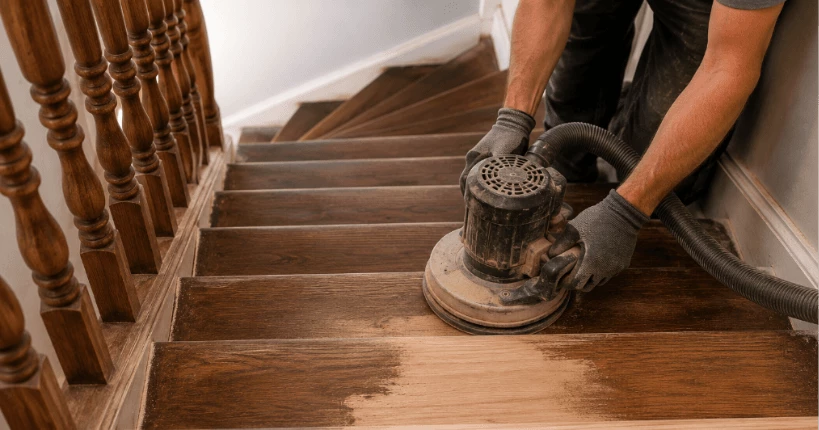
Stairs sanding is the process of removing the top layers of a wooden stair surface to restore its original appearance. The sanding process typically involves using a variety of sanding equipment, including drum sanders and edge sanders, to ensure seamless results across the entire surface.
At Wooden Floor Specialist, we use specialised sanding machines to achieve a consistent, high-quality finish. This service can eliminate minor dents, scratches, and other surface defects, preparing the stairs for a new finish or stain.
We begin by assessing the type and condition of the wood to determine the most suitable grit of sandpaper, progressing from coarse to fine for a smooth finish. For intricate or detailed stair parts, such as balusters and newel posts, we employ hand sanding techniques to maintain their unique profiles.
Sanding is suitable for various types of wood, including oak, maple, and pine, and we customise our approach based on the material and condition of each staircase. After sanding, we can apply finishes that comply with industry standards like BS 8201, enhancing both durability and aesthetic appeal.
For a fresh, revitalised look to your stairs, consider our professional sanding service.
What Types of Stairs Sanding Are Available in Dorset?
We provide several stairs sanding options in Dorset to suit different needs and budgets. Each option is designed to address specific issues and enhance the longevity of your wooden stairs.
Basic Sanding: This option removes the top layer of finish to reveal the fresh wood beneath, suitable for stairs with a light surface scuffing. It's quick and effective for minor restorations.
Full Restorative Sanding: This method goes deeper to address surface imperfections such as scratches and gouges, providing a smooth surface that is ready for re-staining or varnishing. Ideal for stairs with significant wear, it involves both coarse and fine grit sanding to ensure an even finish.
Dust-Free Sanding: Using specialised machines, this technique significantly reduces the spread of dust, making it perfect for occupied homes and commercial spaces where air quality is a concern. These machines are equipped with high-efficiency dust extraction systems.
Our team is experienced in working with various types of wood, ensuring that each staircase is treated with care. Contact us to discuss your specific needs.
What Stair Materials Can Be Sanded?
Our stairs sanding service works effectively on a range of wooden stair materials. These include solid wood species like oak, pine, and walnut, which are known for their durability and ability to handle the repeated sanding required for a smooth finish.
Harder woods such as beech and ash are also suitable, offering added resistance to wear and tear. Before commencing any sanding project, we assess the thickness and condition of the stair material to ensure it can endure the process without compromising its structural integrity.
It's essential to avoid sanding engineered wood stairs with a thin veneer, as this can lead to delamination and surface damage.
Using precision tools like orbital sanders ensures that every corner and detail of your stairs receives an even finish. Each project complies with safety and quality standards, offering peace of mind during the renovation.
Get in touch to discuss your specific requirements
When Is Stairs Sanding Needed in Dorset?
Stairs sanding is needed when the wood surface shows signs of wear, such as scratches, dents, or fading. Over time, foot traffic can cause the timber to lose its lustre, leading to a dull appearance and potential hazards like splinters or uneven surfaces.
In Dorset, many homeowners choose sanding to refresh tired-looking stairs and increase the property's interior appeal. This process involves removing the top layer with equipment like orbital sanders, which ensures a smooth, even finish.
It is also advisable if the surface is slippery or if you plan to change the finish or colour. Sanding helps prepare the surface for new treatments, such as varnish, stain, or paint, ensuring they adhere properly and last longer.
Safety standards, including slip resistance, can be addressed through this process. Get in touch with us to determine if your stairs could benefit from sanding.
How Does Stairs Sanding Work?
Stairs sanding involves the following steps:
Preparation: We begin by meticulously inspecting the stairs to identify any damage or uneven surfaces. Surrounding areas such as walls and floors are covered to protect them from dust and debris. We also check for loose nails or treads and secure them if needed.
Sanding: Using a belt sander with coarse grit sandpaper, we remove the top layer of the wood to eliminate old finishes and stains. We then switch to a drum sander with progressively finer grits, such as 60 to 100 grit sandpaper, to ensure a smooth and even surface. This step often follows British Woodworking Federation guidelines for best practices.
Edge Sanding: Corners, edges, and areas that machines can't reach are sanded using palm sanders or detail sanders. We employ hand tools like scrapers for intricacies around balusters and risers to achieve a finish.
Final Clean: After sanding, we employ industrial vacuums to remove all the dust, followed by a damp cloth wipe-down to ensure the surface is completely clean, preparing it for staining or sealing.
This thorough process ensures that your stairs are perfectly prepared for any subsequent finishing, enhancing both the appearance and durability. Contact us today to revitalise your wooden stairs.
How Long Does Stairs Sanding Take?
Typically, stairs sanding takes one to two days, depending on the size and condition of the staircase. We use industrial-grade sanding machines such as drum sanders and orbital sanders to ensure an even finish across all steps.
After sanding, if you choose to re-stain or finish the stairs, additional drying time of 24 to 48 hours may be needed, using finishes like polyurethane or water-based sealers. The time might extend slightly if your staircase has intricate details or spindles that require careful hand sanding.
We adhere to British Standard BS 8201 when completing all sanding tasks, ensuring high levels of safety and workmanship. Contact us for a more accurate estimate based on your specific needs in Dorset.
Who Needs Stairs Sanding in Dorset?
Our stairs sanding service in Dorset is ideal for homeowners and businesses looking to maintain or restore their wooden staircases. We expertly handle timber types such as oak, ash, and pine, ensuring that the grain and natural beauty of each wood type is preserved.
Property managers, interior designers, and renovation contractors often rely on our expertise to enhance the aesthetic appeal of both residential and commercial properties. The process involves carefully using orbital sanders for even, smooth finishes, followed by the application of protective varnishes or oils that meet industry standards like BS EN 927.
For listed or heritage homes, we also adhere to conservation standards to maintain architectural integrity.
Whether restoring old stairs or maintaining newer ones, we offer solutions tailored to all clients, including retail spaces and multi-storey offices where stair safety and maintenance are crucial.
Contact us today to discuss your staircase project
How Much Does Stairs Sanding Cost in Dorset?
Stairs sanding typically costs between £25 and £45 per step in Dorset. The exact cost can vary depending on factors such as the number of stairs, their condition, and the chosen sanding method.
For example, spiral staircases, which often require more intricate work and time, may marginally increase the overall expense. We employ a variety of sanding techniques, including belt sanding for flat surfaces and detail sanding for corners and edges.
The condition of the existing finish, which may require strip sanding, is also considered. Using machinery such as orbital sanders along with varying grades of sandpaper, from coarse to fine, ensures a smooth finish suitable for the desired coating.
Our team provides a quote after assessing your specific requirement. Call today to get a free quote in the DT11 7 area.
What Are the Benefits of Stairs Sanding in Dorset?
Stairs sanding offers several benefits:
Enhanced Aesthetic: Sanding revitalises the natural beauty of the wood, highlighting its grain patterns and textures. We use fine-grade sandpaper to ensure a smooth finish, perfect for showcasing hardwood varieties like oak, maple, or walnut.
Increased Safety: With stairs being high-traffic areas, the removal of worn finishes can help reduce slips and falls. Sanding allows for the application of anti-slip coatings or textured finishes, meeting safety standards crucial for both residential and commercial properties.
Prolonged Life: Smooth, prepared stair surfaces are ideal for applying new protective coatings such as polyurethane or varnish, which protect against future wear and tear. This process can help in extending the lifespan of the staircase significantly.
Customisation: Sanding provides the opportunity to change the colour or finish of your stairs according to current design trends or personal preferences. From natural oil finishes to bold stains, the options are plentiful and can transform the interior style.
By opting for stairs sanding, you not only improve the functionality but also enhance the visual impact of your staircase. Contact us to explore how we can transform your stairs in Dorset today!
What Regulations Apply to Stairs Sanding?
While stairs sanding is not heavily regulated, it is crucial to ensure that all work complies with general health and safety standards. This includes following guidelines set by the Health and Safety Executive (HSE) to minimise risks when handling machinery and reduce exposure to dust.
Proper dust extraction methods and personal protective equipment, such as dust masks and goggles, should be used at all times to protect workers and residents.
If applying a finish post-sanding, ensure it is a low-VOC (Volatile Organic Compounds) product suitable for indoor use, aligned with standards to improve indoor air quality. Additionally, it is useful to adhere to British Standards when selecting materials and products, to ensure durability and safety compliance.
Regular maintenance can prevent slips and falls, maintaining a safe environment on the property. It is also advisable to check for any specific local regulations or building codes that may apply.
Why Choose Wooden Floor Specialist for Stairs Sanding in Dorset?
Wooden Floor Specialist is your go-to choice for stairs sanding in Dorset. We use advanced dust extraction systems to ensure a clean workspace and protect surrounding areas from debris.
Our team is skilled in handling diverse wood types, including oak, maple, cherry, and walnut, which allows us to achieve the best results for any staircase. We start by assessing the stairs for any pre-existing damage or uneven wear and then select the appropriate grade of sandpaper, such as 60-grit, to remove old finishes.
Following this, finer grits are used to achieve the desired smoothness and texture. We comply with industry standards like the British Wood Flooring Association's guidelines, ensuring our work meets top industry standards.
Our sanding services typically take two to three days, depending on the project scope. Trust us to deliver exceptional results tailored to your needs.
Contact us today to transform your stairs
Frequently Asked Questions
How often should stairs sanding be done in Dorset?
Stairs sanding typically needs to be done every five to seven years in Dorset, depending on foot traffic and wear.
Can all types of wood be sanded in Dorset?
Most solid woods like oak and pine can be sanded in Dorset, but care must be taken with thin veneers or engineered wood.
Is stairs sanding messy?
We offer a dust-free sanding option that minimises mess, making it suitable for occupied properties in Dorset.
Can I change the colour of my stairs after sanding?
Yes, after sanding, you can apply a new stain or finish to change the colour of your stairs.
How soon can stairs be used after sanding?
You can typically use the stairs 24 to 48 hours after the sanding and finishing process is complete.
Get a Free Quote for Stairs Sanding in Dorset
Ready to transform your stairs? Get a Free Quote from Wooden Floor Specialist today and bring new life to your wooden stairs in Dorset.
We cover Dorset